The Green Giants: A History Lesson
Henry Ford's impact on agriculture was as revolutionary as his impact on the automobile industry. The Fordson tractor, introduced in the early 20th century, transformed farming. Its mass-production techniques led to widespread adoption, with significant sales internationally. Collaborations, like the partnership with Harry Ferguson on the three-point hitch system, further cemented the Ford tractor's reputation for innovation. But even giants face challenges. By the mid-1960s, shifting agricultural practices and business decisions led Ford to eventually sell its tractor division to Fiat (later CNH Industrial) in 1991. The iconic Ford name disappeared from new tractors around 2000, seemingly marking an end. Yet, these durable machines continue to work in fields worldwide, a testament to their enduring legacy. Isn't it remarkable how these machines persist, a silent tribute to engineering excellence? For more Ford 8N information, check out this helpful resource: Ford 8N Parts.
The Parts Puzzle: Why Finding Parts Matters
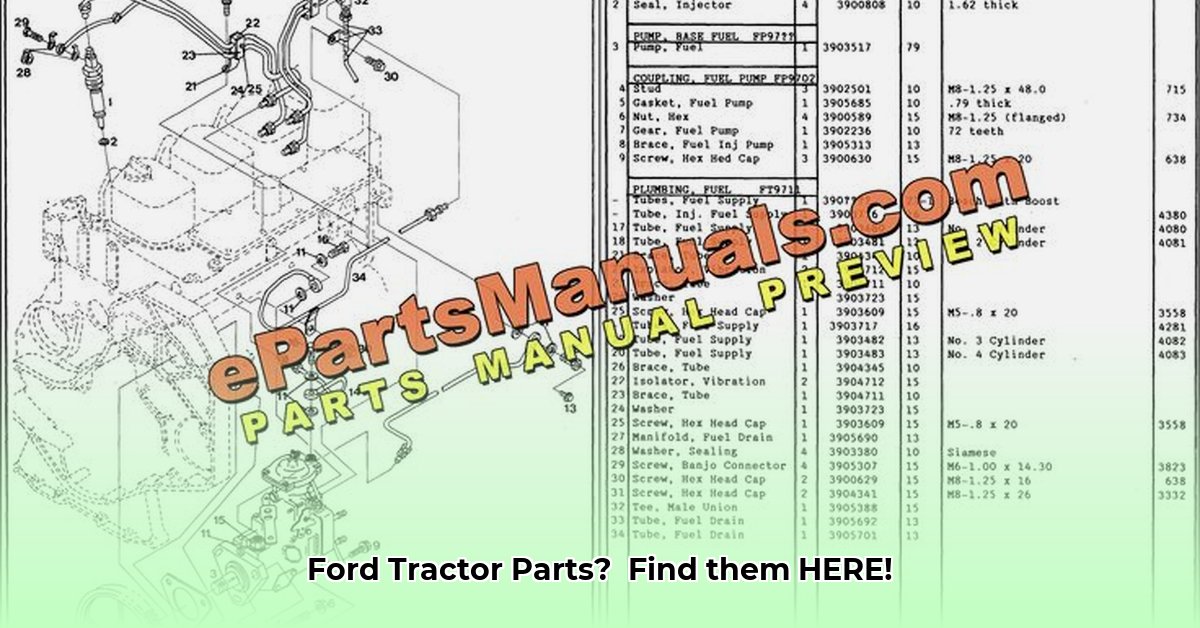
Finding parts for these vintage machines isn't easy. Original parts are increasingly scarce. Replica parts exist, offering a solution, but quality can be inconsistent. Aftermarket suppliers also offer various components, creating a complex network to navigate. A comprehensive parts catalog, particularly a downloadable PDF, becomes invaluable. Sadly, these catalogs are often outdated, difficult to interpret, or simply unavailable. This guide provides a roadmap to navigate this challenge. How many hours have been spent searching for that elusive part number?
Your Action Plan: Sourcing Ford Tractor Parts
Here's a step-by-step guide to finding the parts you need:
Identify Your Tractor: Find your tractor's model and serial number (usually stamped on a metal plate). This is crucial for accurate part identification.
Online Search: Start with websites dedicated to Ford tractors. These often have forums where owners share advice and parts sources.
Contact Professionals: Contact Case IH (CNH Industrial), the current owner of the Ford tractor legacy. They may still supply parts for older models. Specialist shops focusing on classic Ford tractor restoration are also valuable resources.
Explore the Aftermarket: Many aftermarket suppliers specialize in classic tractor parts. Always check reviews before ordering to ensure quality.
Digital Catalog Quest: While finding a perfect PDF catalog is challenging, they remain useful. They provide a starting point for identifying parts and their numbers; even an imperfect catalog is better than none. Have you ever successfully located a PDF from an unexpected source?
Ford Tractor Parts Catalog PDFs: Advantages and Disadvantages
While online parts catalogs offer convenience and cost-effectiveness, they have drawbacks:
| Feature | Pros | Cons |
|---|---|---|
| Availability | Easily accessible online; often free or inexpensive. | Quality varies; accuracy may be questionable; often lack detailed diagrams. |
| Cost | Typically free or cheaper than printed catalogs. | Requires a digital device and internet access. |
| User-Friendliness | Often searchable; easily printable. | Can be difficult for those with limited digital literacy. |
| Part Information | Provides part numbers and descriptions. | May not reflect current availability. |
The Enduring Legacy of Ford Tractors
Ford tractors have left an indelible mark on agriculture. Although Ford no longer manufactures tractors, their legacy thrives. The constant demand for parts, dedicated repair shops, and a passionate community of enthusiasts are testaments to their lasting appeal. The search for the perfect Ford tractor parts catalog PDF is just one chapter in this ongoing story. It is a search fueled by more than just practicality; it is a search driven by respect for history and the desire to preserve these remarkable machines. What does the continued demand for these parts say about the quality and craftsmanship of the original designs?
Navigating the Parts Landscape for Antique Ford Tractors
Finding parts for antique Ford tractors can be challenging. Original parts are highly sought after, but incredibly rare and expensive. Reproduction parts offer a viable alternative, but quality can vary greatly. Aftermarket parts are readily available but may lack authenticity or durability. Each source has its own set of advantages and disadvantages. Carefully considering your options is key to ensuring the longevity of your tractor. What factor weighs most heavily in your decision to source your parts: authenticity, affordability or availability?
Using Ford Tractor Parts Catalogs (PDFs): A Step-by-Step Guide
- Identify Your Tractor Model: Crucial for accurate part identification. The serial number is key.
- Locate the PDF Catalog: Search online. Official Ford sources (if available) are ideal.
- Find the Part: Use the index or diagrams to find the part number.
- Verify the Part Number: Compare with multiple sources before ordering.
- Order the Part: Choose a reputable supplier with a good return policy.
Tips for Successful Sourcing
- Join Online Forums: Connect with other Ford tractor enthusiasts for advice and leads.
- Attend Tractor Shows and Swap Meets: Great opportunities to find rare parts and meet experts.
- Be Patient: Finding the right part takes time.
- Document Everything: Keep records of part numbers and sources.
Pros and Cons of Different Part Sources
| Source Type | Pros | Cons |
|---|---|---|
| Original Parts | Highest quality, authenticity | Scarce, expensive, often in used condition |
| Reproduction Parts | Close to original quality, often more affordable than originals | Potential quality inconsistencies, require careful supplier selection |
| Aftermarket Parts | Readily available, generally affordable | Variable quality, may not be as durable or authentic |